Home › Asphalt Pathways, Sidewalks, and Trails
Connect your property with smooth asphalt pathway paving in Flint, MI. We build sidewalks, multi use trails, and pedestrian routes for schools, parks, and commercial campuses. Asphalt offers a comfortable, continuous surface that is ideal for walking, jogging, wheelchairs, and bikes while remaining cost effective over long distances.
Precision Asphalt Flint provides professional asphalt pathway paving throughout Flint, MI, Michigan and the surrounding area. Our licensed, insured crew delivers safe, clean, on-time work with a free estimate before anything begins. Call (810) 645-8686 or request your free quote.
Durable Asphalt Pathways, Sidewalks, and Trails in Flint
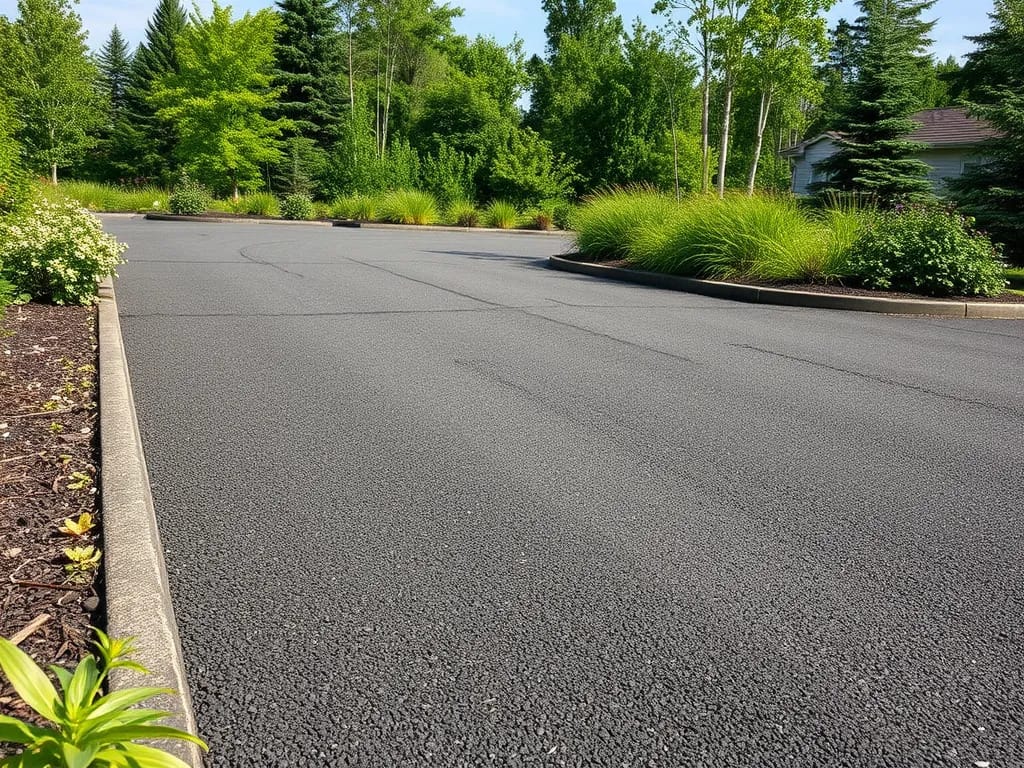
Asphalt pathway paving is a smart way to create smooth, safe routes through neighborhoods, parks, campuses, and commercial properties in Flint. At Precision Asphalt Flint, we focus on pathways, sidewalks, and trails that stand up to Michigan’s freeze and thaw cycles while still looking clean and inviting.
Instead of treating walkways like small driveways, we design them for how people actually use them. That means planning for foot traffic, strollers, wheelchairs, bicycles, and even light maintenance vehicles if needed. We look at your existing grades, drainage patterns, and how people naturally move across your property, then design the asphalt layout to match. This reduces puddling, ice patches, and premature cracking.
Whether you need a winding asphalt trail through a church property, a straight sidewalk along a storefront, or a looped walking path around an apartment complex, Precision Asphalt Flint provides local guidance on what works best in Genesee County conditions. Our goal is simple: pathways that feel good to walk on, are easy to maintain, and keep their structure season after season.
How We Design and Plan Your Asphalt Pathway
Good asphalt pathway paving starts long before the paving machine arrives. Our team begins with a site walk to understand your goals, problem areas, and how the land currently drains. In Flint, we pay close attention to low spots that collect snowmelt in March and April, because those are the locations that typically fail first if they are not addressed.
We then develop a layout and cross section that fits your property. For residential walkways, 4 foot to 5 foot width is common, while community trails and commercial sidewalks may be 6 feet or wider to allow two people or a wheelchair and pedestrian to pass comfortably. If you expect service carts, golf carts, or light maintenance vehicles, we adjust the base thickness and asphalt mix accordingly.
Slope and drainage are critical details. Sidewalks and trails are generally built with a slight cross slope, usually around 1.5 to 2 percent, so water runs off instead of sitting on the surface. We also plan tie ins to door thresholds, curb ramps, and existing concrete, which is especially important for ADA accessibility around schools, offices, and medical buildings in the Flint area.
During planning, Precision Asphalt Flint will also help you decide whether to keep or remove old concrete or asphalt. Sometimes we can overlay a structurally sound base with new asphalt. Other times, especially where tree roots have heaved the surface, it is wiser to remove and rebuild. We explain these options clearly so you can choose based on lifespan and budget, not guesswork.
Step by Step: How Asphalt Pathways, Sidewalks, and Trails Are Built
Once the plan is set, the actual construction of your asphalt pathway follows a clear sequence. First, we mark utilities and protect nearby structures and landscaping. In Flint, we coordinate around typical utility depths and municipal right of way rules, especially along main corridors and neighborhood streets.
If there is existing pavement, we remove it with small excavators or saw cutters, making clean edges where the new asphalt will meet old surfaces. For new routes across grass or soil, we excavate to the specified depth, usually 6 to 10 inches depending on usage and underlying soil. Clay soils, which are common in Mid Michigan, need a bit more attention and stone base to stay stable.
Next, we install and compact the aggregate base. This is often 21AA or similar crushed stone, placed in layers and compacted with vibratory plates or rollers. A firm, unyielding base is what prevents dips and cracking later. If the soil tends to stay wet, we may use a geotextile fabric separator to keep the base stone from pumping down into the subgrade.
After the base is shaped and checked for slope, we pave with a fine graded asphalt mix that is smoother underfoot than a typical parking lot mix. For light duty pedestrian pathways, 1.5 to 2 inches of asphalt is common, placed in one lift. Heavier use trails may receive a thicker section or multiple lifts. The asphalt is leveled and compacted with smaller rollers and plate tampers along the edges to achieve a tight, uniform finish.
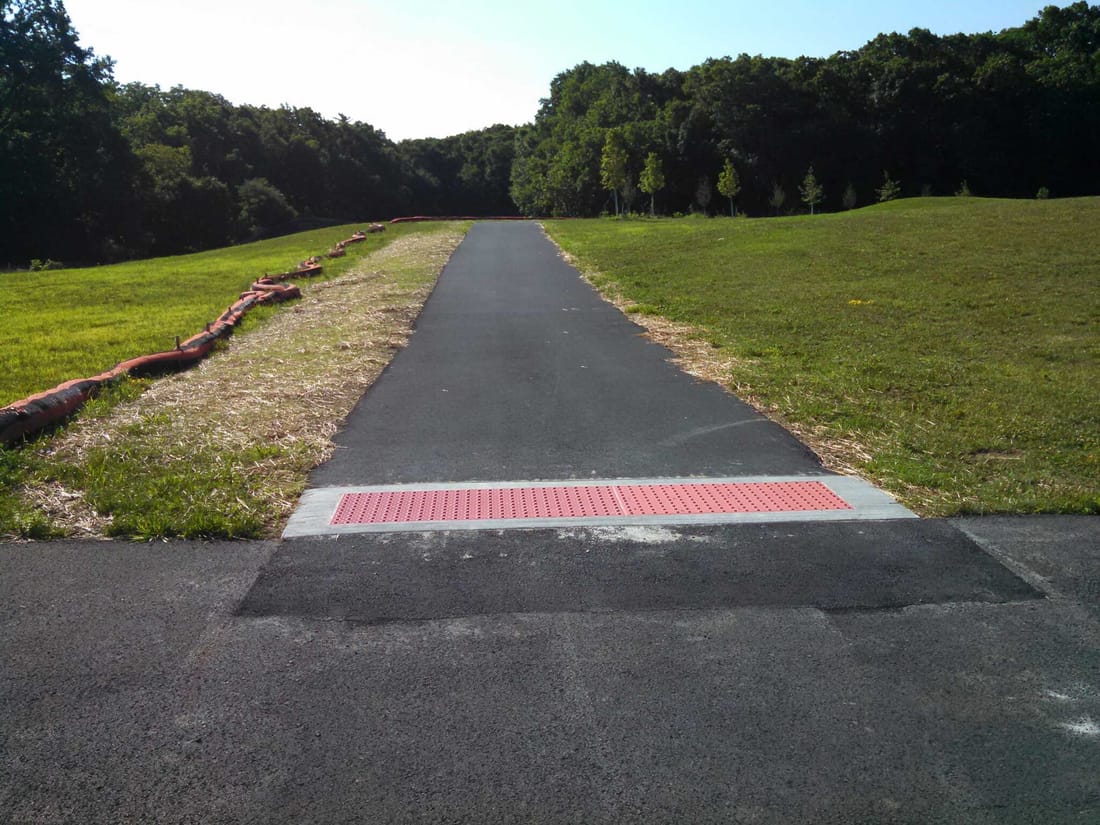
Finally, we address transitions, ramps, and edges. Where an asphalt walkway meets a concrete sidewalk or curb, we taper the asphalt so there is no abrupt lip. In sensitive areas, such as school or medical facilities, we add temporary barricades while the surface cools and hardens for safe use.
Material Choices, Design Details, and Finish Options
Not every asphalt pathway has to look identical. Precision Asphalt Flint offers several practical options that change how your walkway performs and looks without driving costs unnecessarily high.
We can recommend different asphalt mix designs based on expected traffic and climate exposure. For shaded trails that stay damp and icy longer in the winter, a slightly coarser surface texture may provide better grip. For high visibility commercial sidewalks, a finer finish often looks more refined and makes snow shoveling easier.
Edge support is another key detail. For simple residential asphalt pathways laid through a lawn, we often compact the soil and stone at the edge to create a firm shoulder, then let the grass grow up to the pavement. For busier public or commercial paths, we may recommend concrete header curbs or flush concrete bands at select locations to better contain the asphalt and resist edge breakage.
If your pathway has curves or intersections, we adjust thickness and base conditions at those stress points so the surface does not ravel or crack where users turn and slow down. For shared use trails, such as those used by both walkers and bikes, we can plan for center striping, intersection markings, and clearances that support safe two way movement.
We also talk through snow management. Flint winters are hard on narrow pavements. If a plow truck will be used, we will design widths and turning areas to reduce damage from plow blades and heavy axles. For shovel and snowblower only areas, we can prioritize a smoother texture and gentler slopes that are easier to keep clear.
What Affects Cost and Longevity of Asphalt Pathway Paving
Customers in Flint often ask why asphalt pathway paving quotes can differ from job to job. The main cost drivers are site conditions, base depth, pathway width and length, and how easy the area is to access with equipment.
Soil type is a big factor locally. Soft or wet subsoil, common near creeks, low lying yards, or older neighborhoods with poor drainage, requires additional base stone or stabilization. That adds cost but significantly extends the life of the path. A pathway built straight over soft dirt might look fine the first year, but will settle and crack much faster.
Width and structural design also matter. A simple 4 foot residential walkway intended only for foot traffic can be built with a lighter section than a 10 foot multi use trail that needs to carry maintenance vehicles or golf carts. At Precision Asphalt Flint, we explain these differences clearly, so you know what you are paying for and how long to expect it to last.
Accessibility and layout impact both price and performance. Tight backyards with fences, steep slopes, or lots of tree roots usually take more labor and smaller machinery to complete. Long straight runs are more efficient to pave than intricate curves around landscaping. We look for ways to simplify layouts without sacrificing function, which can keep your project within budget while still delivering a long lasting result.
If budget is a concern, we often help Flint property owners phase projects. For example, you might build the stone base and a first asphalt lift this year, then add a final wearing course later. Or you may choose to improve the highest traffic sections first, such as entries and main connections, and extend secondary paths in a second phase.
Maintenance, Common Issues, and Why Local Experience Matters
Even a well built asphalt walkway needs basic care. The good news is that maintenance is straightforward. Keeping the surface swept, sealing cracks early, and controlling weeds at the edges will add years to the life of your pathway or trail.
In Flint, the most common issues we see on older asphalt paths are frost heave bumps, cracked edges where grass has overgrown, and alligator cracking in low spots that hold water. Precision Asphalt Flint addresses these by identifying the root cause, then choosing the right repair method. Small cracks can often be cleaned and filled with hot crack sealant. Heaved areas from tree roots might need localized removal, root trimming, and a rebuilt base. Widespread alligator cracking usually points to a failed base, which calls for a deeper reconstruction rather than a thin overlay.
Sealcoating is not always required for narrow pathways, but for higher traffic sidewalks or trails exposed to a lot of sun and deicing salts, a properly timed sealcoat can help protect the asphalt binder from drying and raveling. We will advise based on how your specific path is used rather than just recommending a blanket schedule.
Timing your work around Michigan seasons is also important. For new asphalt pathway paving, the best window is typically late spring through early fall when temperatures allow proper compaction and curing. We carefully watch weather forecasts so your project is not rushed ahead of a cold rain or freeze. This attention to timing makes a real difference in how well the asphalt bonds and how long it performs.
When you reach out to Precision Asphalt Flint, we will walk your site, listen to how you need the path to function, and give you straightforward recommendations. Our focus is on building and maintaining asphalt pathways, sidewalks, and trails that make it easier and safer to move around your property in every Flint season.