Home › Industrial and Heavy-Duty Asphalt Paving
Handle heavy loads with confidence using industrial asphalt paving in Flint, MI. We engineer and install thick, reinforced asphalt sections for truck yards, loading docks, warehouses, and equipment areas. Proper base design, compaction, and mix selection keep your pavement from rutting or breaking under repeated heavy traffic.
Precision Asphalt Flint provides professional industrial asphalt paving throughout Flint, MI, Michigan and the surrounding area. Our licensed, insured crew delivers safe, clean, on-time work with a free estimate before anything begins. Call (810) 645-8686 or request your free quote.
Industrial Asphalt Paving Built for Flint’s Tough Conditions
Industrial asphalt paving in Flint is different from paving a driveway or small parking lot. Heavy trucks, forklifts, fuel spills, and our freeze-thaw cycles all beat up pavement fast if it is not designed for that level of abuse. Precision Asphalt Flint focuses on pavement structures that can handle industrial traffic and Michigan winters without crumbling in a few years.
When we look at an industrial or heavy-duty project, we start by understanding exactly what is using the pavement. A Flint warehouse with daily semi traffic on Center Road needs a different section design than a small plant with box trucks off Dort Highway. We ask about axle loads, turning patterns, storage locations for loaded trailers, and expected growth in traffic. This information drives our recommendations on base thickness, asphalt mix type, and reinforcement.
Local soil conditions in and around Flint also matter. Old industrial sites along the river, former GM properties, and older factory parcels often have fill soils, cinders, or buried debris that cannot support heavy-duty paving unless it is addressed correctly. Precision Asphalt Flint performs test cuts and, when needed, coordinates soil testing so the pavement structure is built on something that will not move or pump water into your asphalt.
Our goal is simple: build industrial pavement that remains functional and safe under heavy loads, with a realistic maintenance plan, so you are not shutting down operations in five years to rebuild the same area again.
How We Design and Install Heavy-Duty Asphalt Pavement
A quality industrial asphalt paving job in Flint starts with design, not with the paver. Precision Asphalt Flint follows a step-by-step process that keeps surprises out of your project.
First, we evaluate your site. This involves checking drainage paths, existing grades, downspout locations, and any low areas where water already collects. On older Flint manufacturing sites, we often find sunken patches over old utilities or filled basements, which must be corrected before we pave. We mark out heavy traffic lanes, loading zones, dumpster pads, and tight turning areas, since these spots need extra strength.
Next, we engineer the pavement section. For true heavy-duty work, like constant semi traffic or loaded trailer storage, a typical design might include 8 to 12 inches of compacted crushed concrete or limestone base, topped with 3 to 4 inches of industrial asphalt in multiple lifts. The exact thickness depends on your traffic, soil support, and budget. For lighter industrial use, such as panel vans and occasional straight trucks, we may be able to reduce thickness without sacrificing performance.
We then prepare the subgrade. Soft or pumping soils are undercut and replaced with compacted aggregate. In some Flint locations with poor native soil, we recommend geotextile fabric beneath the base to help bridge weak spots and extend service life. All base material is installed in lifts and compacted to a specified density with vibratory rollers so it will not settle as soon as you start using the pavement.
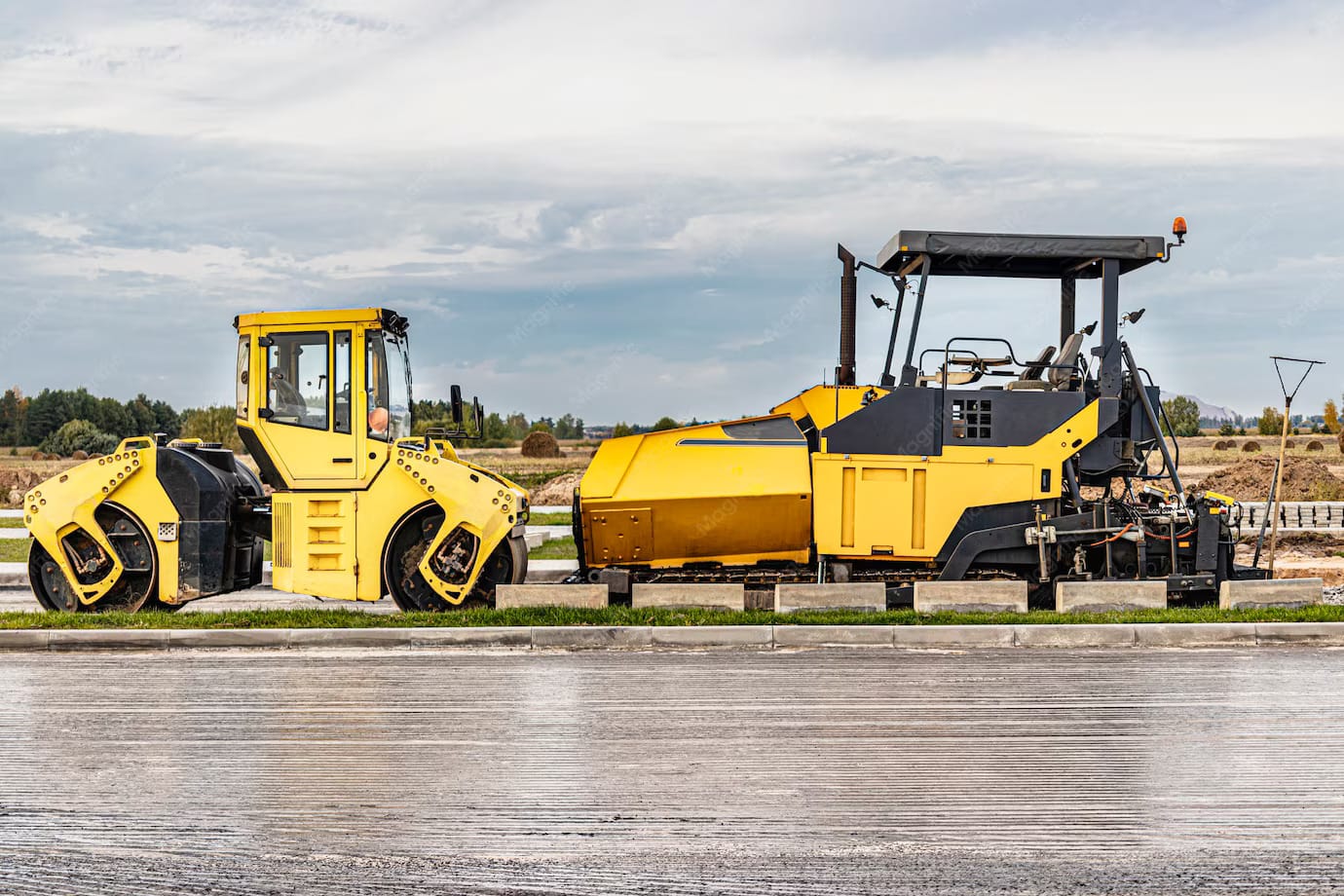
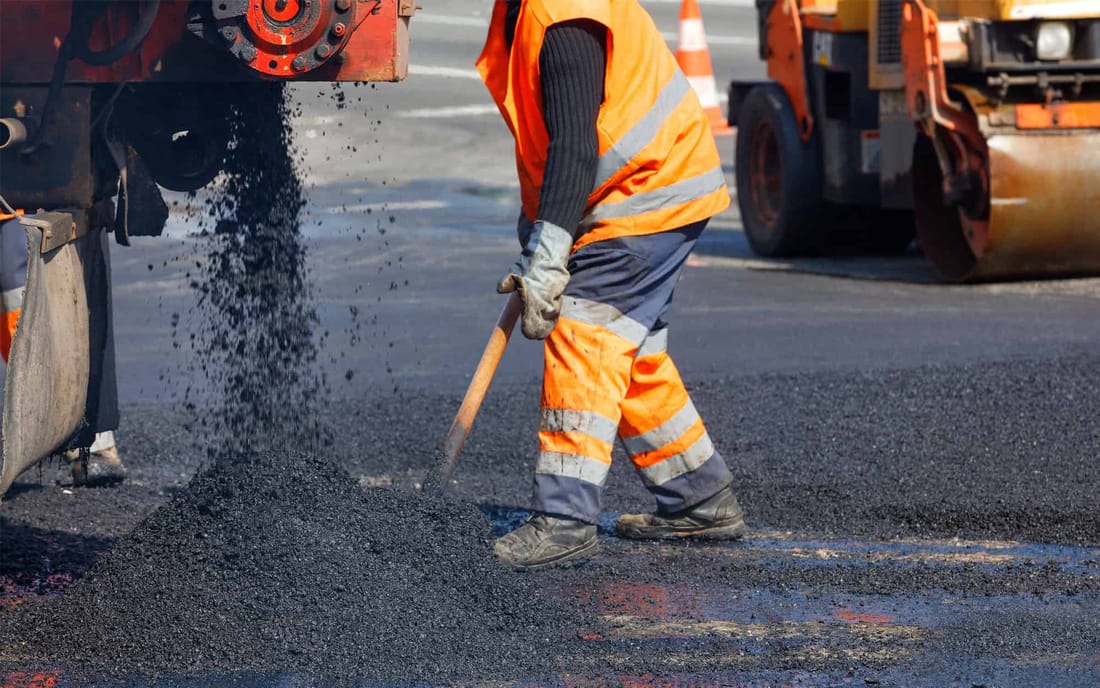
During paving, we place asphalt in controlled lifts, typically 2 to 2.5 inches at a time, so we can get proper compaction through each layer. For industrial applications, we use heavier-duty mixes with higher stone content and modified binders where appropriate. Precision Asphalt Flint uses steel drum rollers and pneumatic rollers to achieve density, which is what truly gives the pavement its load-carrying strength. Joints, especially where new asphalt meets older pavement or concrete dock areas, are carefully cut, tacked, and compacted so they do not ravel out.
Finally, we address details that affect long-term performance. This includes tying in to existing concrete, shaping slopes away from buildings, installing catch basin adjustments, and cutting proper transitions to city streets. Only when the structure is sound do we stripe traffic lanes, dock numbers, and safety markings so your operations team can get back to work quickly.
Material Choices, Mix Designs, and Cost Drivers
Industrial asphalt paving costs more than standard commercial work because the materials and designs are heavier and more specialized. Precision Asphalt Flint walks you through these cost drivers so you can make informed decisions instead of just taking the lowest proposal and hoping for the best.
Material selection starts with the asphalt mix. For heavy-duty applications, we typically recommend a dense graded mix with a higher percentage of larger aggregate to resist deformation under slow, heavy wheel loads, such as forklifts and loaded semis. In areas with high shear, like tight turnarounds at the end of loading docks, we may specify an even stiffer mix that stands up to twisting forces. In fuel exposure zones, like near diesel pumps or generator pads, we can use polymer-modified binders that hold up better to spills and heat.
Thickness and base quality are the next big cost pieces. Many failing industrial lots in Flint were built with residential-style sections, for example 4 inches of asphalt over 4 inches of base. That might look fine at first, but as truck traffic grows, rutting and base failure show up quickly. Investing in a proper base with enough thickness and compaction is usually the best use of your budget. We will often show you two or three section options, such as a thicker base with slightly thinner asphalt versus a thinner base and thicker asphalt, so you can weigh up-front cost against expected service life.
Access and phasing can also impact price. If your plant needs to stay open, we may pave in stages, working around your shipping schedule. Night or weekend work, tight access for trucks, or complex traffic control around city streets in Flint can add to labor and mobilization costs. We are upfront about these factors so you can plan for them.
Reclaiming and reusing existing pavement is one way we sometimes help control cost. On some sites, we can pulverize and reuse your existing asphalt as part of the new base, provided it is structurally sound and not contaminated. This reduces disposal fees and the need for new aggregate, and it can shorten your project timeline.
In every case, we compare the cost of building it correctly now versus repeated patching and downtime later. For most industrial clients, especially logistics, manufacturing, and municipal yards, building a heavy-duty section that outlasts the equipment lease cycle is usually the better value.
Common Industrial Pavement Problems in Flint and How We Fix Them
Flint’s combination of freeze-thaw cycles, aging industrial buildings, and heavy truck traffic leads to a predictable set of pavement problems. Understanding what is really going wrong under the surface helps you choose the right repair, not just the cheapest patch.
Rutting in wheel paths is common in truck lanes and around loading docks. This usually means the asphalt mix was too soft for the traffic, the lifts were not compacted correctly, or the base is moving. Precision Asphalt Flint approaches rut repairs by first checking whether the base is stable. If the base is sound, we can mill out the rutted wheel paths and replace them with a stiffer, industrial-grade mix. If the base is unstable, we remove the failed section, rebuild the base, and then repave so the rutting does not return.
Alligator cracking and potholes are typically signs of structural failure. We see this a lot on long-serving Flint factory lots that grew over time from light cars to steady semi traffic. Thin asphalt sections can not carry that load forever. In these areas, surface patching is just a bandage. The long-term fix is to cut or mill out the fatigued area, strengthen the base, and install a thicker, load-rated asphalt section tied into the surrounding pavement.
Drainage-related damage is another big one. Standing water in low spots near dock doors or in the middle of truck lanes accelerates freeze-thaw damage and leads to loose aggregate and potholes. Our crews regrade those areas by milling and repaving with new slopes that shed water toward catch basins or swales. In some Flint facilities, we add or adjust drainage structures, then tie them into the city system or on-site retention so water is not sitting on the asphalt surface.
Fuel and chemical spills can soften or eat away at asphalt over time, particularly around fueling stations or loading areas where solvents or oils are handled. We identify these zones during our site walk, then specify more resistant mixes and, in some cases, concrete pads in the highest risk spots. For existing damage, we remove contaminated asphalt, replace it with appropriate materials, and may recommend ongoing surface treatments as part of your maintenance plan.
By matching the repair approach to the real problem, Precision Asphalt Flint helps industrial owners avoid wasting money on work that will not hold up as soon as winter or heavy traffic returns.
Planning, Phasing, and What Flint Industrial Owners Should Know Before Hiring
Industrial and heavy-duty asphalt paving projects have to be planned around operations. Shutting down truck traffic for a week is often not realistic, especially for manufacturers, distribution centers, or municipal fleets. Precision Asphalt Flint spends time upfront working out a phasing plan that keeps your site functional while we work.
We coordinate around your busiest shipping windows and any critical production schedules. For example, on a Flint warehouse off I 69, we may pave truck lanes in halves, keeping one side open while the other side cures, then flip. For tight sites with only one access point, we may propose temporary stone ramps or scheduled night work so emergency and delivery vehicles can still get in and out.
Before you hire an industrial asphalt paving contractor, ask to see examples of pavement section designs they have used for similar traffic levels, not just pictures of blacktop. A serious contractor should be able to explain why they are recommending a certain base thickness, mix type, and joint detail for your Flint facility. They should also walk your site with you and point out drainage issues, weak areas, and any concerns about underground utilities or poor soils.
You should also expect a clear plan for traffic control and safety. That means signage, barricades, and flaggers if needed, especially if your site connects to busy Flint roads or if employees are walking across the work zone. Precision Asphalt Flint provides you with a schedule that notes when each area is closed, when it can handle foot traffic, and when it is ready for light and then heavy vehicles.
Maintenance planning is the last piece many owners overlook. Heavy-duty asphalt still needs care if you want it to last. We usually recommend an inspection schedule and simple maintenance tasks, such as prompt crack sealing in high-stress joints, timely patching of isolated damage before winter, and periodic restriping so traffic patterns stay clear. We can build these services into a multi-year plan so your facility manager is not caught off guard.
When you are ready to talk about industrial asphalt paving in Flint, Precision Asphalt Flint will walk you through options that make sense for your specific operation, not just hand you a one-size-fits-all quote.